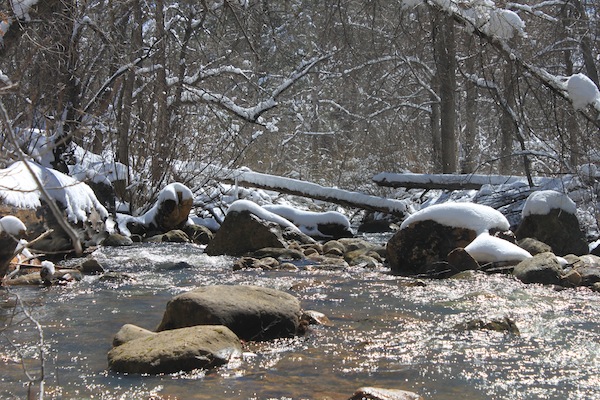
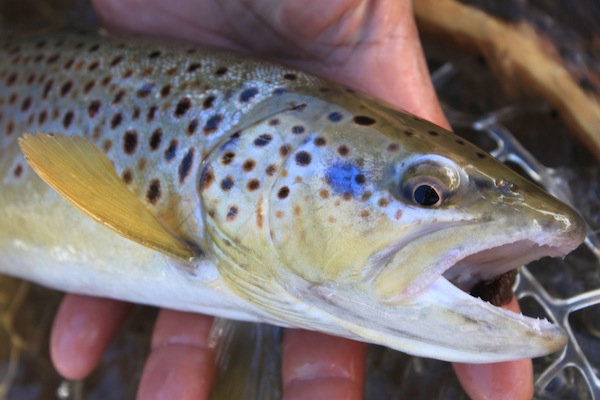
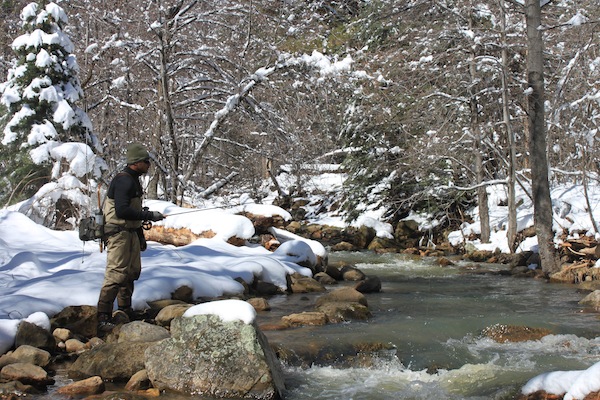
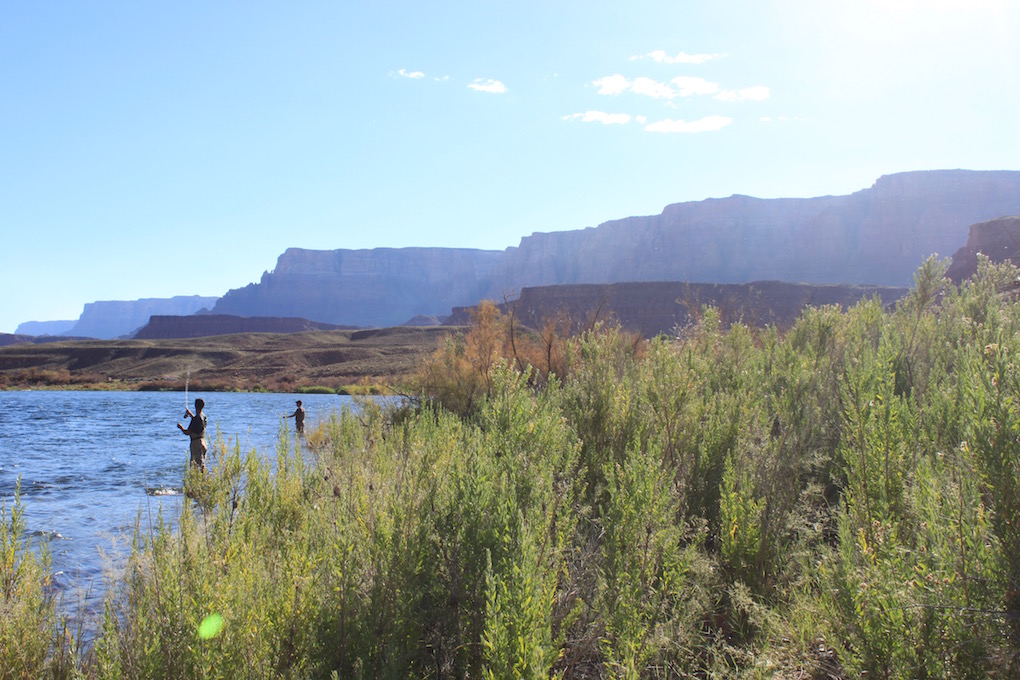
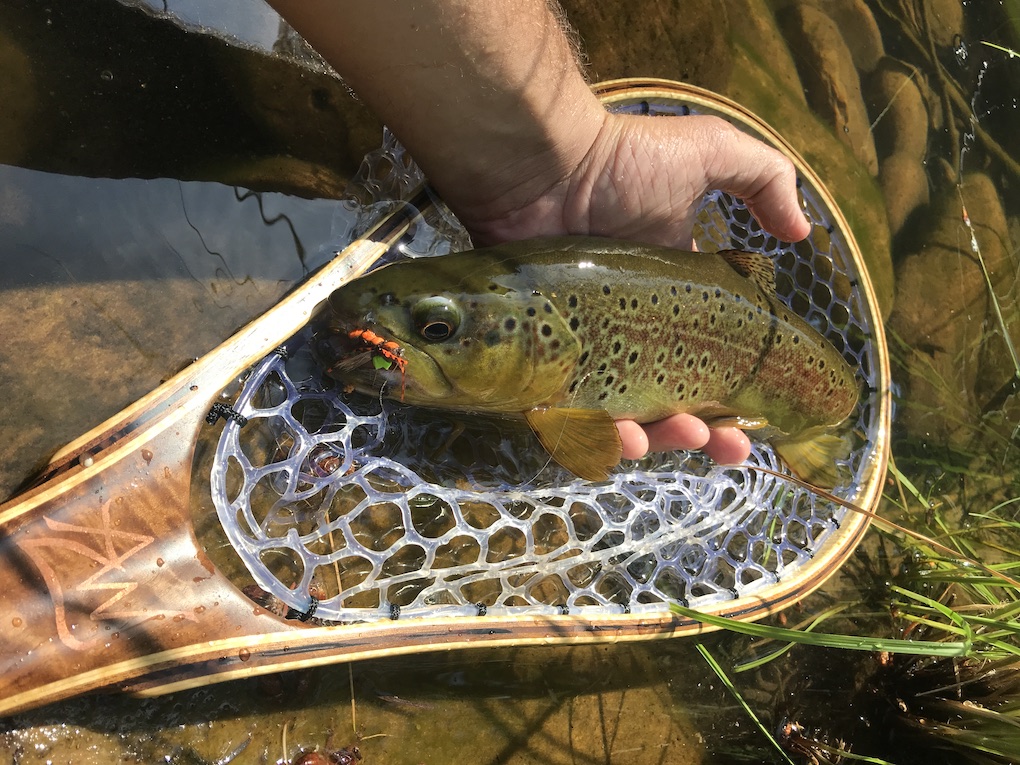
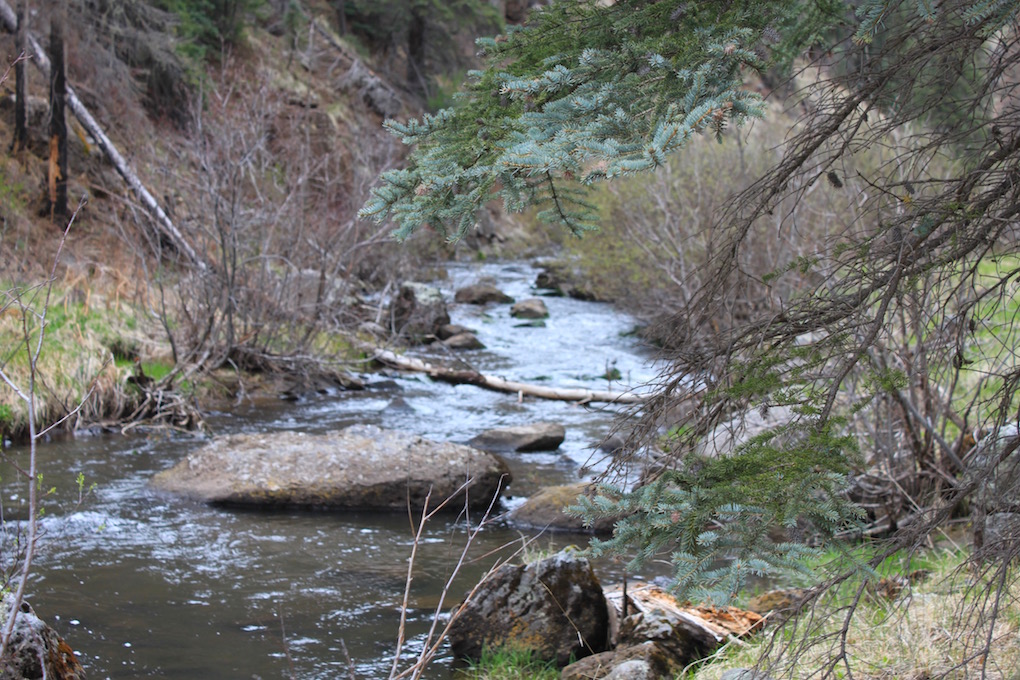
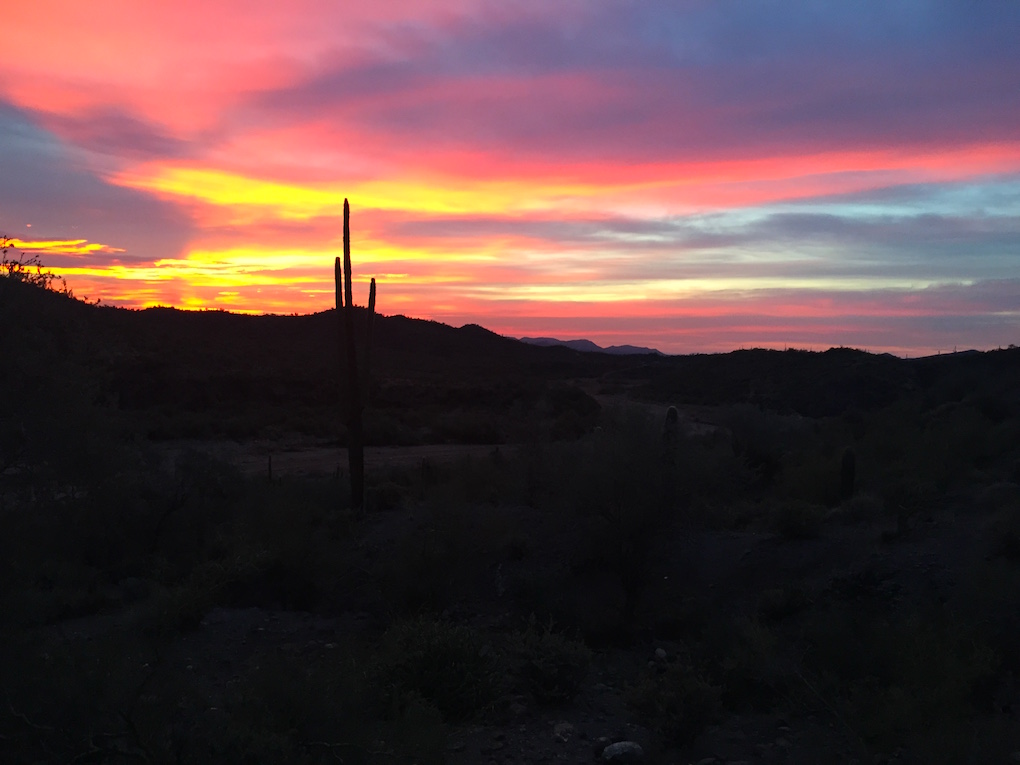
Found some time to make it up north to wet a line. It was later in the morning by the time Antonio and I hit the water. It was a beautiful day with quite a bit of snow on the banks and in the woods. The water was a bit off color, but I hooked into four different fish and didn’t land one of them. While I struggled to put anything in the net, Antonio was able to land a nice brown. It was beautiful day to be on the creek, but all it did was make me long for wet wading and hoppers.
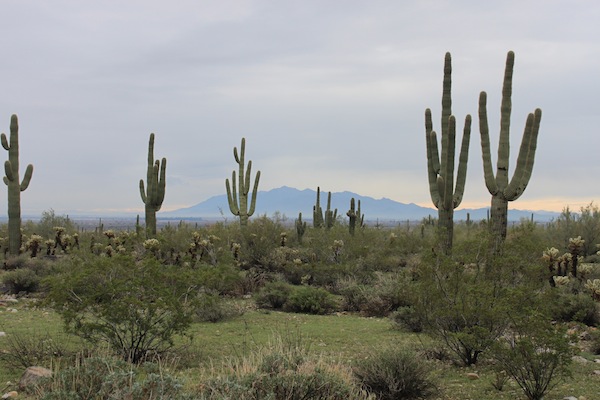
I live in Arizona. It’s hot. Believe it or not though, we get some serious snow in the high country that shuts down some of my favorite streams. For the past several years, I have resigned myself to fishing some of the local carp ponds and scooting up to fish the mountains when the snow melts. This year, all that changed with a pair of Atlas 12 Series Snowshoes. Arizona had a couple of pretty decent snowstorms, and I took the opportunity to test out the Atlas 12 Series Snowshoes and take advantage of the solitude.
Atlas 12 Snowshoes
First impressions:
The weight – At 4.08 lbs, the Atlas 12 Series Snowshoes are some of the lightest snowshoes on the market.
The bindings – Like any new piece of gear, I instantly want to try it on and see how it works. Some of the “high-tech” gear on the market can take an advanced degree to figure out. I plopped the Atlas 12s on the snow stepped into them and cinched the bindings tight. It was game on from there.
Atlas 12 Snowshoes
Field Use:
My primary use for these snowshoes was accessing hard to reach water in the mountains. This means rocks, downed trees, and steep canyons. The Atlas 12 Series snowshoes have an extremely aggressive crampon setup on the bottom. Any icy/slick conditions get eaten up by the ice-tips on the heel and the Holey-1 toe crampon. Growing up, I had an old pair of wooden snowshoes that had been handed down to me. I remember having such a problem going uphill. That was not the case with the Atlas 12s. There is a heel lift bar that flips up to relieve the increased stress put on calf muscles, and when combined with the crampons underneath, getting out of the canyon is significantly easier
The Atlas 12 Series really shined in the heavy snow in the bottom of the canyon. At their widest point, the 12 Series measure almost 9 inches. This extra width helps to keep you up on top of the deep powder. The Atlas spring-loaded suspension provides the perfect amount of flex in uneven conditions and allows the foot to gain the right amount of traction.
It is obvious that a ton of technology is wrapped up in the 12 series, but that technology translates into ease of use. The WRAPP Pro bindings can be manipulated with gloves on and make the on/off task very simple.
The end result of all of the great features is an excellent set of snowshoes. Gearing up for the creek, I have multiple layers on, waders, wading boots, and a lumbar pack. Even with all the bulkiness, the Atlas 12 Series Snowshoes took me in and out of a couple of steep canyons and put me on beautiful water in winter solitude.
Atlas 12 Snowshoes
Pros:
Lightweight
Rocksolid Aluminum Frame
Easy on/off bindings
Abrasion Resistant Nylon Decking
Agressive Crampon Setup
Spring-Loaded Suspension
Cons:
At the higher price point, the 12 series are a worthwhile investment.
Atlas 12 Snowshoes
Prognosis: Hands down, the Atlas 12 Series Snowshoes are a worthwhile investment for anyone looking to get into the solitude of the backcountry.
* Disclaimer:
The reviews at Arizona Wanderings are my honest opinion. Arizona Wanderings is not sponsored by or associated with any of the stated companies and is accepting no compensation, monetary or otherwise, in exchange for this review. The Atlas 12 Series Snowshoes were provided by Atlas for the purpose of this review. My independent status may change in the future but, as of the date of publication, no relationship other than described above has been pursued or established.
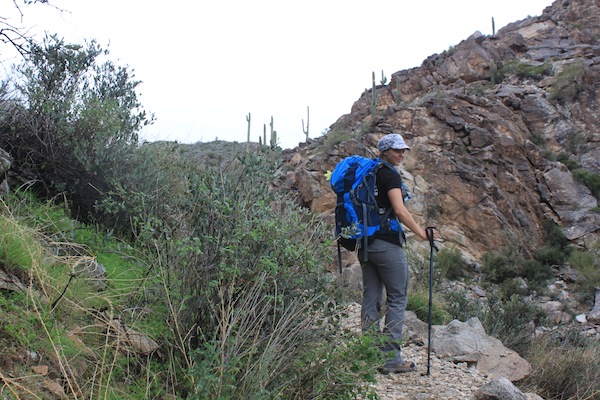
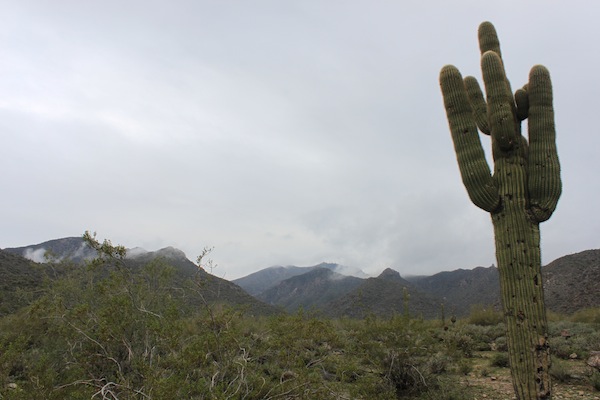
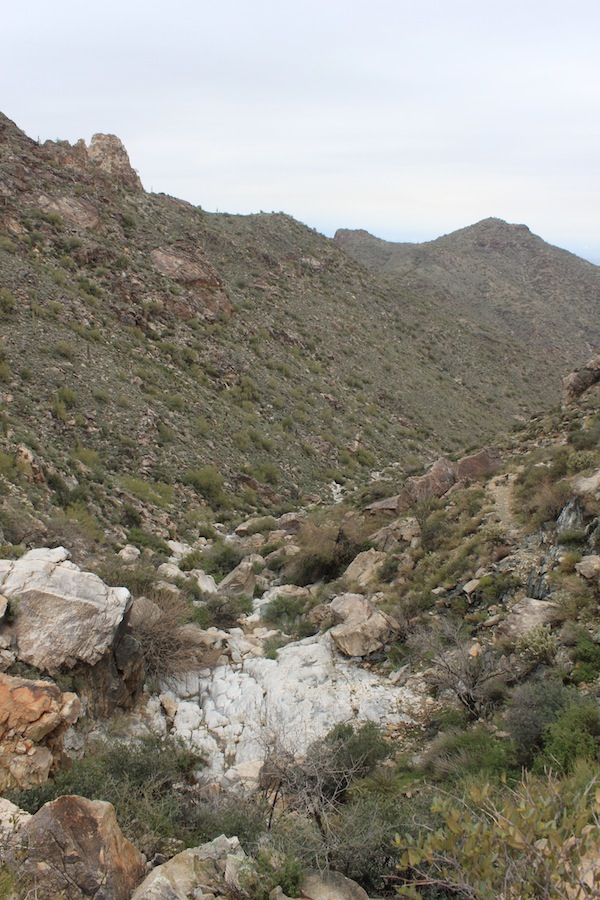
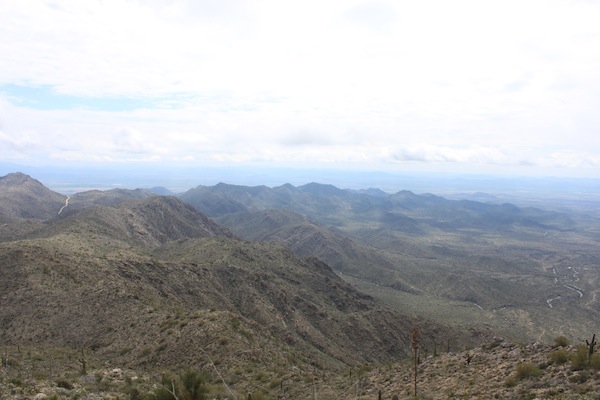
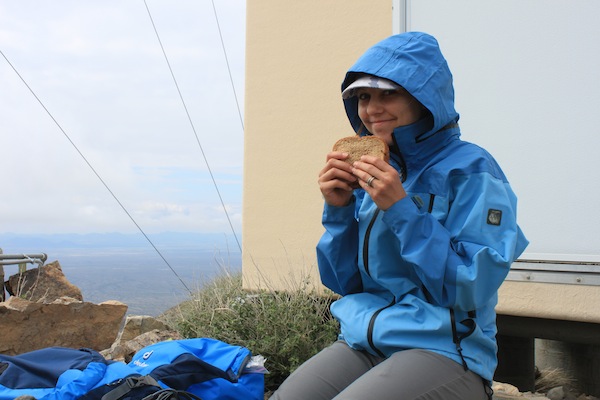
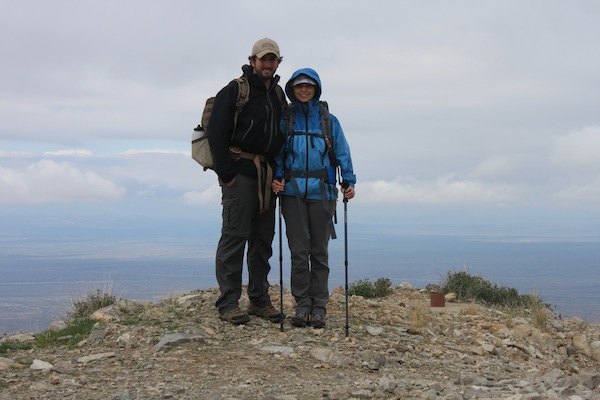
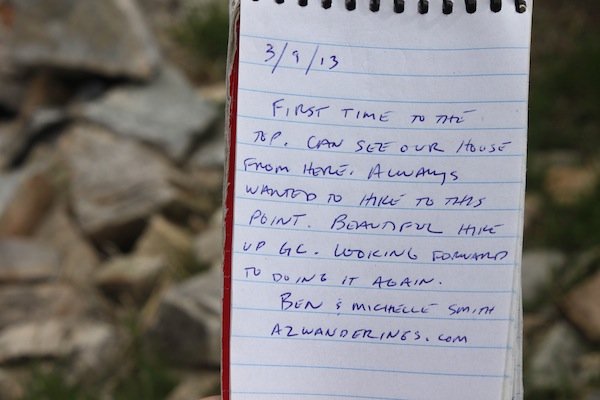
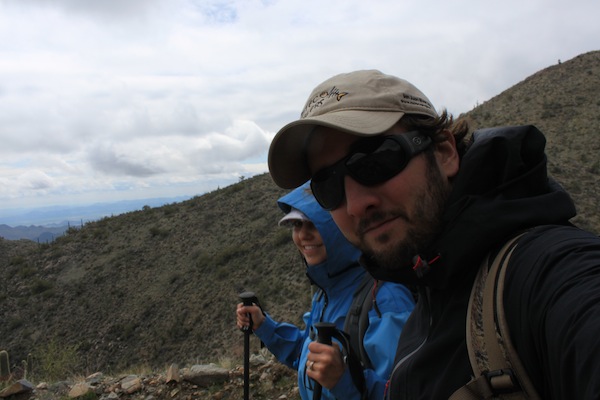
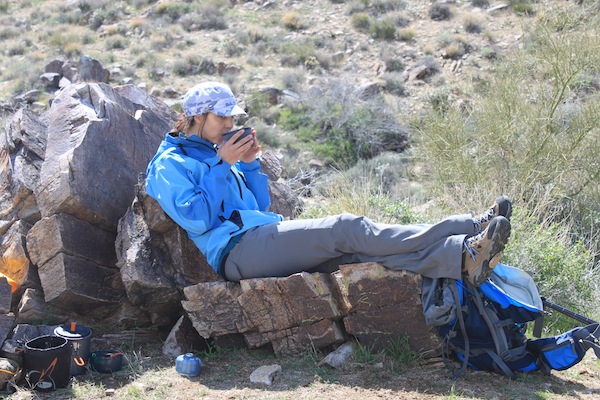
Michelle and I live not far from the White Tank Mountains. As a matter of fact, you can see Barry Goldwater Peak, the highest point in the White Tank Mountains, from our back yard. Since moving to Arizona, I have said on more than one occasion, that I would like to hike to the top of those mountains. So, we did. The 13 mile round trip hike was a heck of a workout, but extremely rewarding. Here’s some images from our journey.
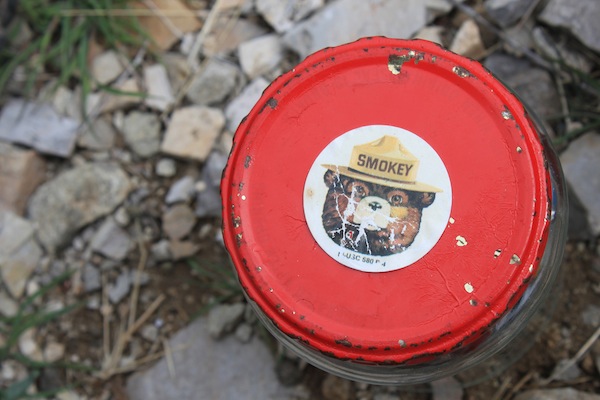
Our DestinationWhy they call them the “White Tanks”View from the topPB&JsSummitSmokey the BearOld Log BookLog BookHeading DownCup o’ tea
Gearing up for my upcoming fly fishing trip to Pyramid Lake in search of some big Lahontan cutthroat trout, I kept running across the Pyramid Lake Tadpole fly pattern. The Pyramid Lake Tadpole is a fairly simple pattern and can be tied up in a number of different color variations. The Pyramid Lake Tadpole is typically fished in tandem with a wooley bugger on a fast sinking line. Its buoyancy coupled with the heavy sinking line allows the fly to bounce back along the bottom of the lake as it is stripped back.
Material List:
Hook: #6 Curved Caddis Hook (extra heavy for strength)
Thread: 6/0 Black Uni-thread
Tail: Marabou (optional to switch out for Krystal Flash)
Foam: Loco foam (Northern Lights) Note: Loco foam is expensive so I tied a bunch up using regular 2mm craft foam and some glittery craft foam I found at the local craft store.
Underbody – Purple Estaz Chenille
Wrap thread on hook back to the bend. Tie in marabou clump. I have seen quite a few tied with a short Krystal Flash tail instead.Northern Lights Loco FoamCut foam to 1/4″ – 1/2″ wide strip and secure to hook. I like to add a dab of superglue before laying the foam on the hook shank.Estaz ChenilleSecure Estaz to the hook.Wrap Estaz to the front of the hook, being careful not to crowd the eye.Fold foam over the Estaz and secure with loose wraps, gradually getting tighter. If you crank down on the thread the first two or three wraps, you run the risk of cutting the foam.Trim head and whip finish.
I follow and read a good number of blogs from around the country. I typically follow these blogs for the photography, tying tutorials, fishing reports or a good story. Arguably one of the most well fly fishing written sites on the web right now is Mysteries Internal by Erin Block. So when Erin put together a book that chronicled her journey through making a bamboo rod, I pre-ordered without a second thought.
The View from Coal Creekdid not disappoint. Erin’s voice came through the pages crisp and clear as she described not only the beauty of the bamboo fly rod, but also the journey that she took to get there. It is not enough to say that Erin is a talented writer. It goes far beyond that. She is a magnificent storyteller and I look forward to many more to come.
When I started doing research for flies for Pyramid Lake, the Maholo Nymph kept popping up on every Pyramid Lake fly list that I read. After some more research I found some pictures of what the Maholo Nymph was supposed to look like and made a stab at trying to recreate it with the materials that I had at hand. Although I’m looking forward to seeing how it’s going to work at Pyramid, I also think that the Maholo nymph could be tied up in some smaller sizes and make a great attractor pattern on some of the small creeks here in Arizona. Since it’s so bright and shiny, the Maholo nymph could be the ticket in the early spring when the water is still a bit high and off color.
The original Maholo Nymph was designed by Rod Anderson of the Reno Fly Shop. The name comes from a cross between the Hawaiian word for “thank you” and the Holographic tinsel used for the body of the fly.
Material List:
Hook: Curved Caddis/Shrimp Hook (I’ve been tying #10 and #8s for Pyramid)
Gold Bead
Thread: Black 70 Denier Thread
Tail/Wingcase/Legs: Pheasant Tail
Body: Red Tinsel (Sulky Holoshimmer Tinsel available in multiple colors at craft store)
Rib: Small Copper Wire
Thorax: Olive Ice-Dub (I substituted some red Simi-Seal Material on some of the different colored tinseled bodies)
Clear Cure Goo Tack Free
Optional: Pearlescent Tinsel for flashback wingcase
Bead. Wrap thread to bend in the hook. Secure pheasant tail with thread wrapsHoloshimmer Tinsel found at local craft storeSecure tinsel and wire with thread wrapsWrap tinsel forward and secureWrap wire forward and secureLightly coat the tinsel and wire with Clear Cure Goo. This helps with durability.Tie in pheasant tail fibers for wingcase and legs. I’ve seen some tied with a piece of Pearlescent tinsel for the wingcase as well.Green Ice-Dub for a thorax.Fold the pheasant tail over and secure. Pull the legs back along the side and secure with a whip finish.Some different color variations. Some tied with Pearlescent tinsel for wingcase.
I had a great morning at the Payson Fly Caster meeting swapping fishing stories and talking about small streams. The guys and gals in that club are involved in a number of different conservation projects here in Arizona, and I was honored to be invited up to their club for the day.
After the meeting ended around 11, I still had the rest of the day to myself. I turned the truck east and walked through the woods to one of the creeks of the 260. I made my way to the stream and tied on a heavy streamer. The melting snow had swollen the creek and the fishing was quite slow. A small brown and a few holdover rainbows came to the net before I called it quits for the day.
I’m caught in that weird spot of the year where hunting seasons are over and the fishing remains a bit marginal. Looks like I will be catching up on some more tying and waiting with anticipation for the summer months full of big foam hoppers.
Communication in the field is absolutely essential. I spend a good portion of October through February, chasing Gambel’s quail through the rugged Sonoran desert and when hunting with a buddy, it is critical to stay in contact with each other for safety and success on the hunt. As usual, I started searching for radios that would stand up to the elements and offer superior functionality. I believe I have found both in the Motorola Talkabout 2-Way Radios.
Note: It would be difficult, if not impossible, to list each and every feature about these radios. In this review, I listed and noted the highlights that stood out to me on multiple hunts in the field. The link above details the many features that are included in the Motorola Talkabout 2-way radios (Model # MT352PR).
Motorola Talkabout
First impressions:
Triplets – The Motorola Talkabout MT352PR Radios come in a three pack. This is perfect for most hunting situations that I find here in Arizona. Specifically while quail hunting, having three radios ensures that even if there are multiple hunters, we can remain in contact throughout the day.
Weatherproof – Although we do not see a whole ton of rain and snow during quail season, having equipment that is weatherproof is pretty important. Sweat, incidental splashes from water bottles, or the freak rain shower in the desert all require hunting equipment to withstand some amount of moisture.
Ear-buds and microphone – The Motorola Talkabout MT352PR Radios come with a set of ear-buds which also have a built in microphone. With the correct settings, the the Talkabouts become hands-free. I immediately thought of the implications of a spot and stalk hunt. By being hands free and spotter can stay in communication with the hunter in the field.
Motorola Talkabout
Field Use:
In my situation, the bulk of use that the Motorola Talkabout Radios see is quail hunting. One way or another, gear gets beat up in Arizona. You name it – the sun and heat, the brush, a random rainstorm, – Arizona has it. I probably hunted a dozen weekends this past season and the Motorola Talkabouts hung on man different vests and several of my hunting partners tried them out with me. The response was the same accross the board – “These radios are awesome.”
Most quail hunting situations puts hunters, at most, a couple hundred yards a part. Having said that, the ups and downs of Arizona’s washes and canyons can split hunters up very quickly. The Motorola Talkabouts were extremely functional in these situations. Where before we were relying on whistles, yelling, or hand signals, the radios kept us in constant contact. The rechargeable NiMH battery packs included with the radios lasted through 8 hours in the field with bars of power to spare. They are rated up to 15 hours of use. The battery packs can be substituted for three AA batteries if there is no power outlet handy.
Just out of curiosity, I did a real simple test where I put about a half mile and a large hill between myself and buddy. The radios worked without issue. The range on this particular model says they are good up to 35 miles. Having done some research, most of these ratings come with some sort of stipulation and factors that need to be taken into account.
One of the things that is very apparent about the Motorola Talkabout MT352PR Radios is that there are a ton of options and features. These radios can be very versatile, if you take the time to work through the owner’s manuel. I personally like the silent/vibrating feature as opposed to the loud beeps in the middle of the hunt. Another feature that shows some forethought is the built-in flashlight on the bottom of the radios. For those early morning hunts that begin before the sun comes up, the flashlight can come in real handy.
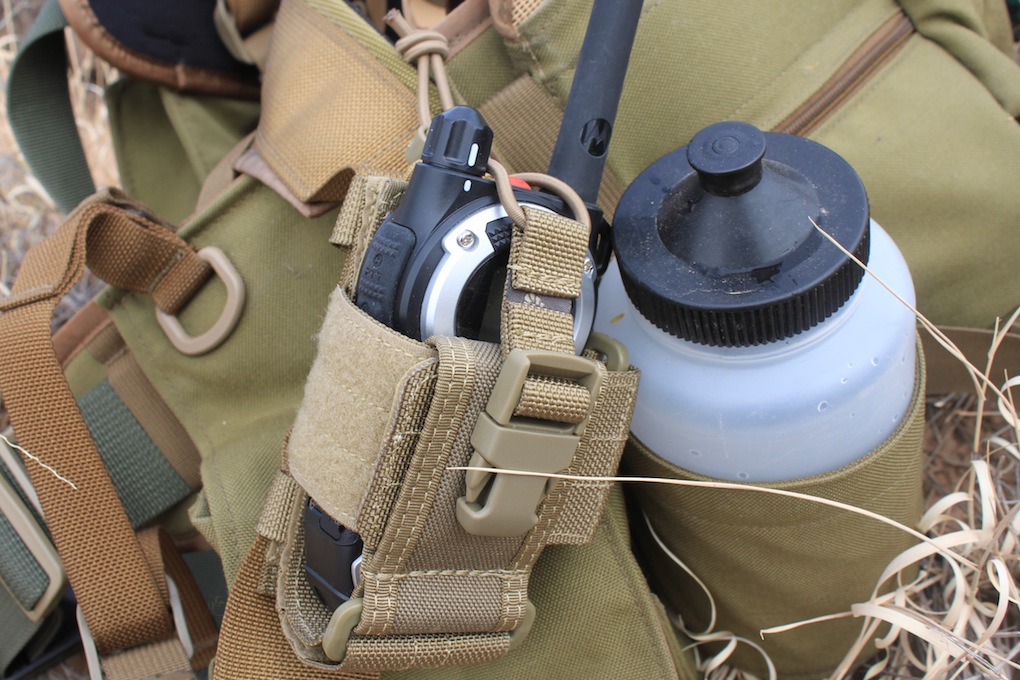
The radios come with a belt clip for each, but when bushwhacking through heavy brush I found that a Maxpedition CP-L radio case to fit perfectly on my hunting pack and quail vests. They are pricey, but well worth the investment in my opinion.
Motorola and Wingworks
Pros:
Weatherproof
Rugged Construction
Good Battery Life
Excellent range for hunting trips
Hands free option/ear bud and mic
Cons:
35 mile range? (only under optimal conditions)
So many features that it is important to read the user manual to understand them all (I know that’s a stretch to make a con)
Motorola Headset
Prognosis: If your looking to improve communications in the outdoors, definitely check out the Motorola Talkabout 2-Way Radios.
* Disclaimer:
The reviews at Arizona Wanderings are my honest opinion. Arizona Wanderings is not sponsored by or associated with any of the stated companies and is accepting no compensation, monetary or otherwise, in exchange for this review. The Motorola Talkabout 2-Way Radios (Model # MT352PR) were provided by Motorola for the purpose of this review. My independent status may change in the future but, as of the date of publication, no relationship other than described above has been pursued or established.