

After I returned from my four day adventure at the San Juan, I received more than a few emails asking about what type of setup I was using while I was there. In answer to those emails I put my artistic skills to the test and drew up a diagram of the rigging that I was using. I am by no means an expert, but this information was handed down to me by more than one San Juan die-hard. It is good information and really worked while I was at the San Juan River. (Note: My pictures may not be to scale or 100% accurate, but cut me some slack…)
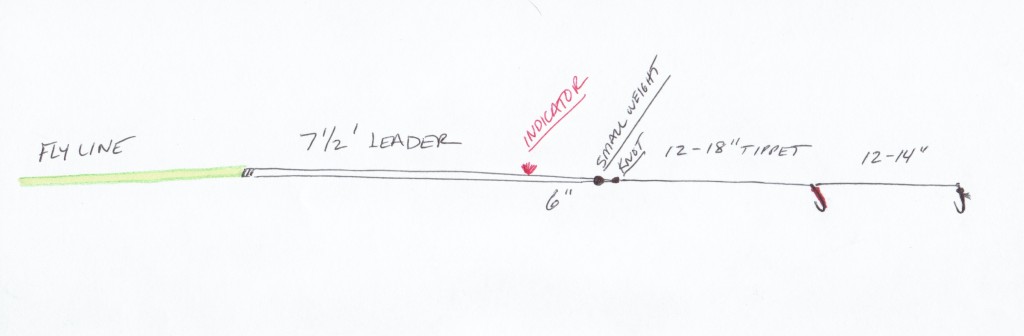
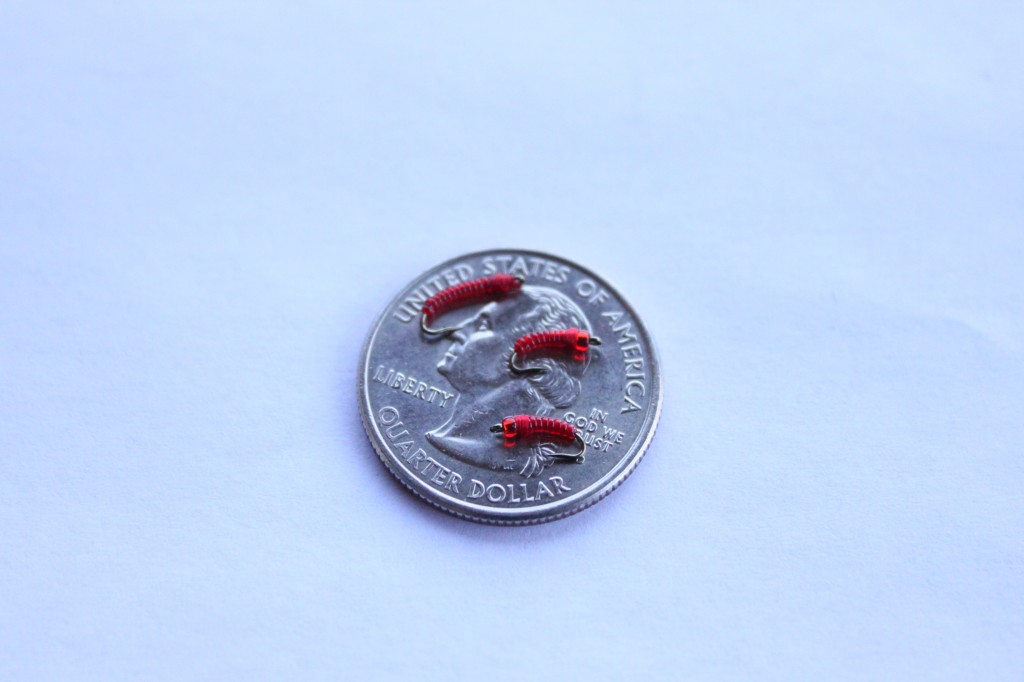
This is the standard setup that I used while I was at the San Juan. I used 6x flourocarbon tippet material off of my leader. My first fly never changed the whole time I fished a two nymph rig. The Red Hot annelid accounted for a majority of the fish that I ended up catching on the San Juan.
The second fly was equally important and I switched it occasionally as the conditions dictated. I generally fished a zebra midge (black body, silver or gold wire wraps, black head)
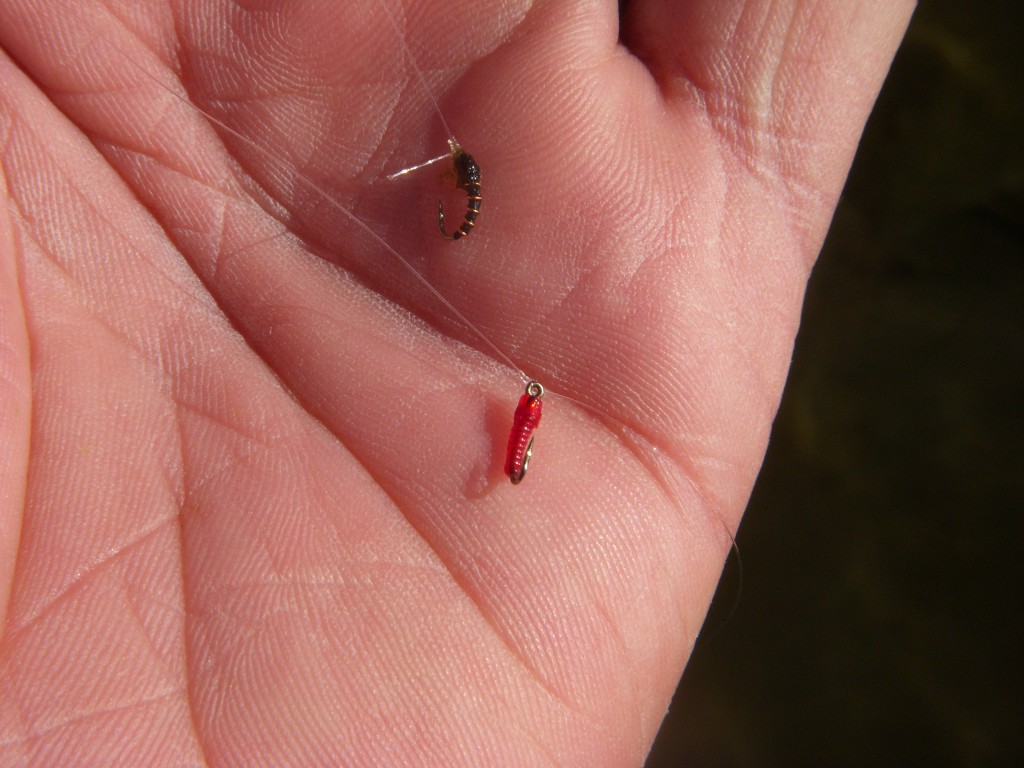
or a KF Emerger (brown body, gold wire wraps, Krystal Flash wing, brown head).
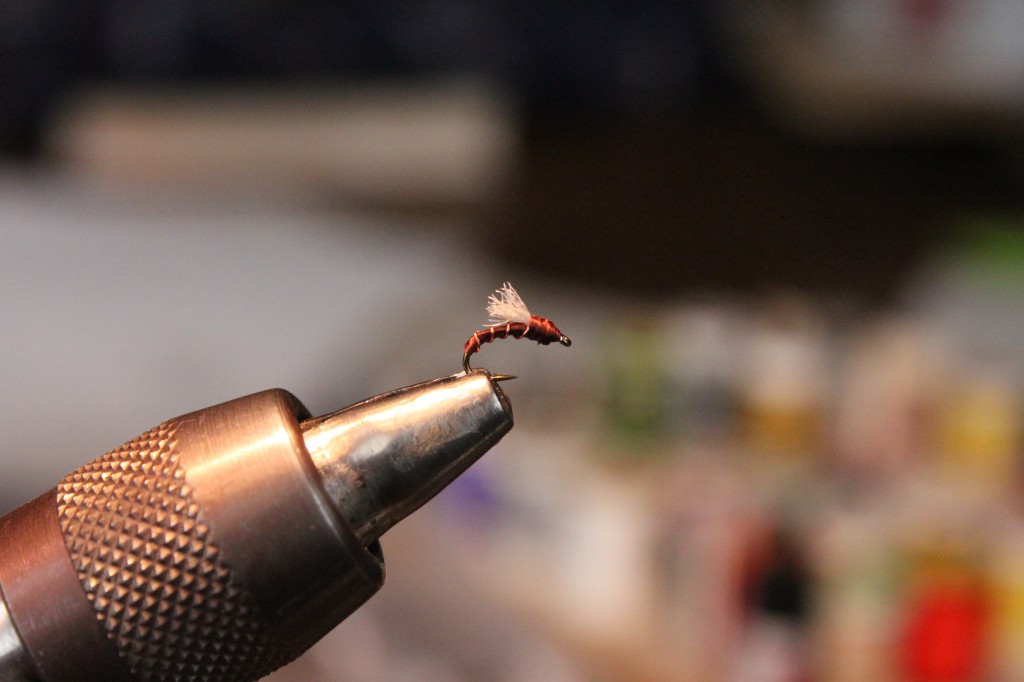
I found that the smaller the flies, the more fish I caught. So I ended up fishing a #24 for all three flies.
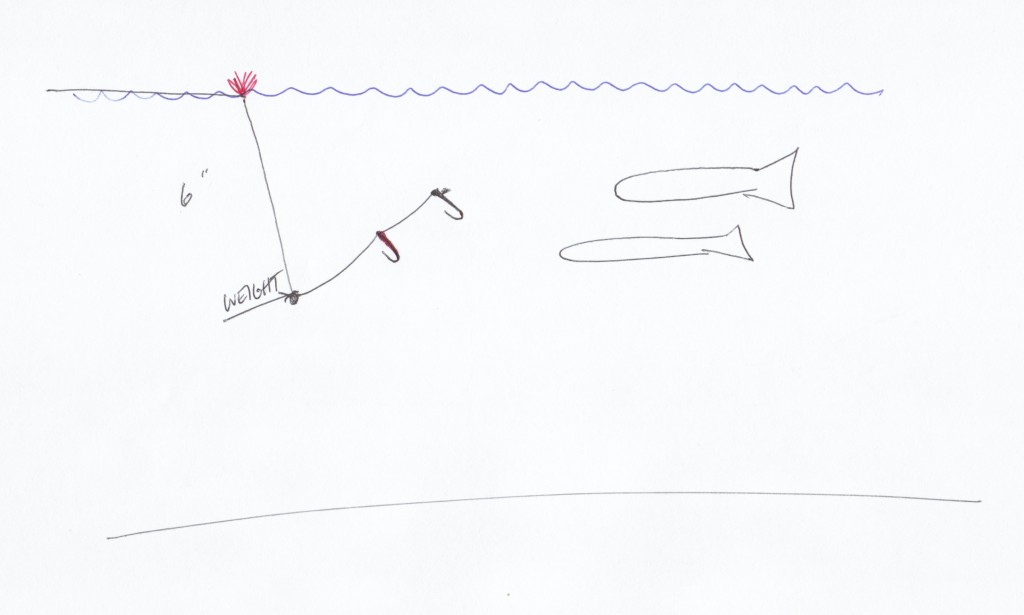
Since I was fishing most of the time in the shallower ripples and braids above Kiddie Pool, I set my indicator at around 6 inches. After several passes through a particular lie, I would adjust my indicator to allow the weight to drop lower and the flies to float deeper.
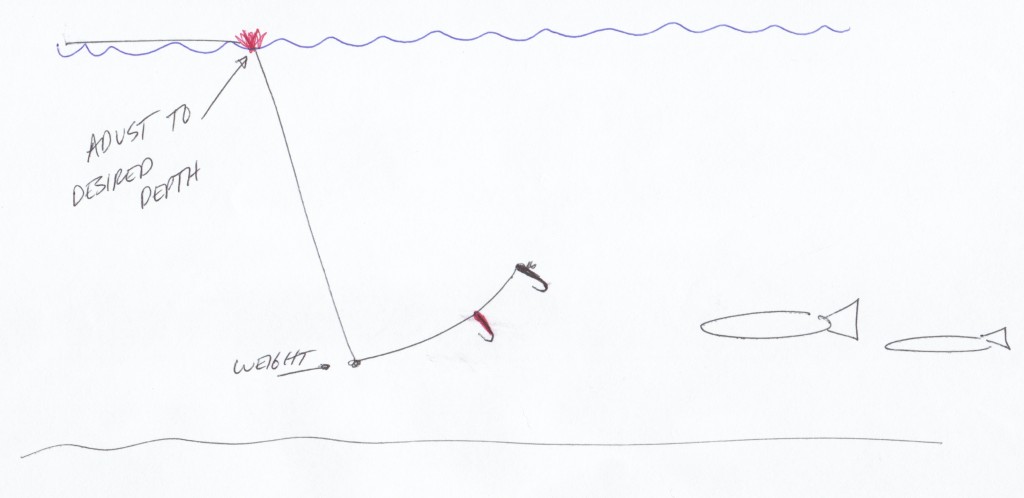
When I fished one of the deep swift runs on the River I found that if I was fishing the rig at a really deep depth, I need to add more weight to my line in order to get the flies to the desired depth. I have heard and read that you should set your indicator at 1.5x the desired depth you desire and that will get the flies where you want them, but that’s difficult if you do not know the depth of a hole or run. For me it was a guessing game, but it seemed to work out ok. Experimenting with depth when the fishing slowed seemed to be one of the most important things I did in order to find fish again.
Nymph fishing under an indicator is not my favorite way of fly fishing, but the fish I caught were extremely rewarding. Even though I was using an indicator, its main use was not to detect the take. The indicator was there generally to keep the depth of my flies consistent. Most of the fish I caught, came from actually seeing the fish move or take the fly. I fished fairly aggressively and set the hook on any movement from the fish or anything out of the ordinary with my indicator.
If I am missing something on this topic or you have a question feel free to email or leave a comment.
The small flies work very well. I like to use 5x tippet. some people say it may not work as good as 6x or 7x, but I have never had a problem with it. I prefer to use Orvis Mirage 9ft 5x and Orvis Mirage 5x tippet as it turns invisible in water.
When fishing a nymphing rig, a way to know you are fishing too deep is your flies are constantly covered in moss. When this happens it is time to change the depth of your rig or take some weight off. A CLEAN FLY CATCHES FISH. Use the helicopter to clean your fly it works. Make you helicopter big so you do not get a wind knot.
I prefer to use as little weight as possible so I can detect a strike with my indicator. I prefer to use a green and yellow top hat. My second choice would be a black thing a ma bob.
Hopefully this helps someone catch a few fish.
Good info Gary. You’re right on with the clean fly comment. The Juan has a lot of funk on those rocks and I quickly caught on to the concept of “a clean fly catches fish.” Good info. Thanks for sharing.
Ben
ummm, you need to add an addendum to your sketches: the ‘after’ shots with your flies in lip, tight line, fish jumping clear of the water! I’ve seen it! It would be a disservice to leave an incomplete synopsis my friend! 😉
Srlsy, nice post Ben! mike
Thanks Mike. Truth be told I probably have run my artistic well dry after those couple of masterpieces. Glad I got the nod from you on the information. Can’t wait to get back there. Thanks again, Mike.
Ben
Good call on watching the fish rather than the indicator. Those fish let go of your fly the instant they feel drag. Awesome fish drawings! You should put under the fish!
Thanks David. Those fish sure are smart. They taught me a thing or two while I was at the Juan. Thanks for the kind words on my drawings…
Ben
Great information on your Blog! I have enjoyed reading about your adventures & poring over the pictures on your site!
You mentioned setting your indicator six inches from your splitshot. What is the depth of the water avg? So, you watch the fish where you est. your flies to be and set the hook whenever you see a flash, fish opens his mouth etc.
Busta,
Thanks for the kind words. I set the indicator relative to the depth of the water and adjust it from riffle to riffle. The water on the Juan varies from spot to spot. If you are consistently hooking the bottom or picking up vegetation then your indicator is too high. The indicator is really just keeping your flies at a consistent depth. If it dips set the hook, but most of the time you’ll see the flash of a fish take your fly before you see the indicator dip. I hope this helps. Shoot me an email and I can definitely go more in depth. Good luck and tight lines…
Ben
Ben: I asked some questions a few months ago about your hopper pattern….I tied a few up but haven’t been able to try them yet. More questions…..I live in Fayetteville, NC and am planning a trip out to AZ to visit my daughter and to fish in the White Mtns. or over at Frye Mesa….for Apache and Gila trout….can you help me here or any other member that might have some info for me. I like to do my HW before going, so any suggestions will be helpful……also my mates suggested we go over to the San Juan for a couple of days….I like your willingness to share info with others. My email address is CHEESEHEEL@aol.com….so if you or anyone else would like to share I would appreciate it. Regards, Bob
Sending you an email shortly.
I pinch the shot at the very bottom and then attach two flies with small tags of line with the indicator above everything.. It looks exactly like a bait fishing surf rig of catfish rig.. I fished this rig all the time on the provo and as soon as I switched I stopped losing flies.. The split shot pops off not the flies.
Good info Fanatic. I’ll give it a shot next time I’m over there. Take care.
Ben
Hello Guys,
thanks for this nice topic on midges – i am novice at midges despite my 7″ year carrier” of a fly fisherman, and just this couple of months i started tying and fishing them. waters near my town (Tbilisi, republic of Georgia) are mostly shallow and sometimes you dont even need a split shot to sink the flies to the fish. i am just using tungsten beads on those tiny zebra midges and 7x tippet (Orvis Mirage is just great). in this case indicator should be as lighter as possible (especialy on a 7’6 ft 3 weight rod). but i noticed that shallow water causes spooking of the fish by the indicator and i just added some crystal flash shucks to the flies to be more attractive. now i can easily say that midging became one of my favorite techniques. all year round you are a king on the water ))
thanks for sharing the experience.
tight lines everyone
I am somewhat new to nymphing (learning). A lot of people show same rig you were using
But they show the split shot on the bottom and the flies hovering off the bottom a few feet. I have often wondered which one actually occurs on a drift. If you split shot is hitting bottom are you not too deep with your rig and need to adjust bobber? Or is that a different way to fish the rig? Or just some peoples misinterpretation of what their rig is doing? Other than a bounce rig I can’t see why you would want you shot touching bottom, but again I’m learning.
You’re right. There is a very fine line between your flies ticking off the bottom and full on dragging across the bottom. If you are getting hung up over and over again, shorten up the distance between the indicator and flies.
There are many different ways to rig your flies. I know many folks have success by running a rig with the split shot on the bottom. At the end of the day, I just want to know that my flies are far enough down to be in the same zone as the fish. I hope that helps. Take care.
Ben